
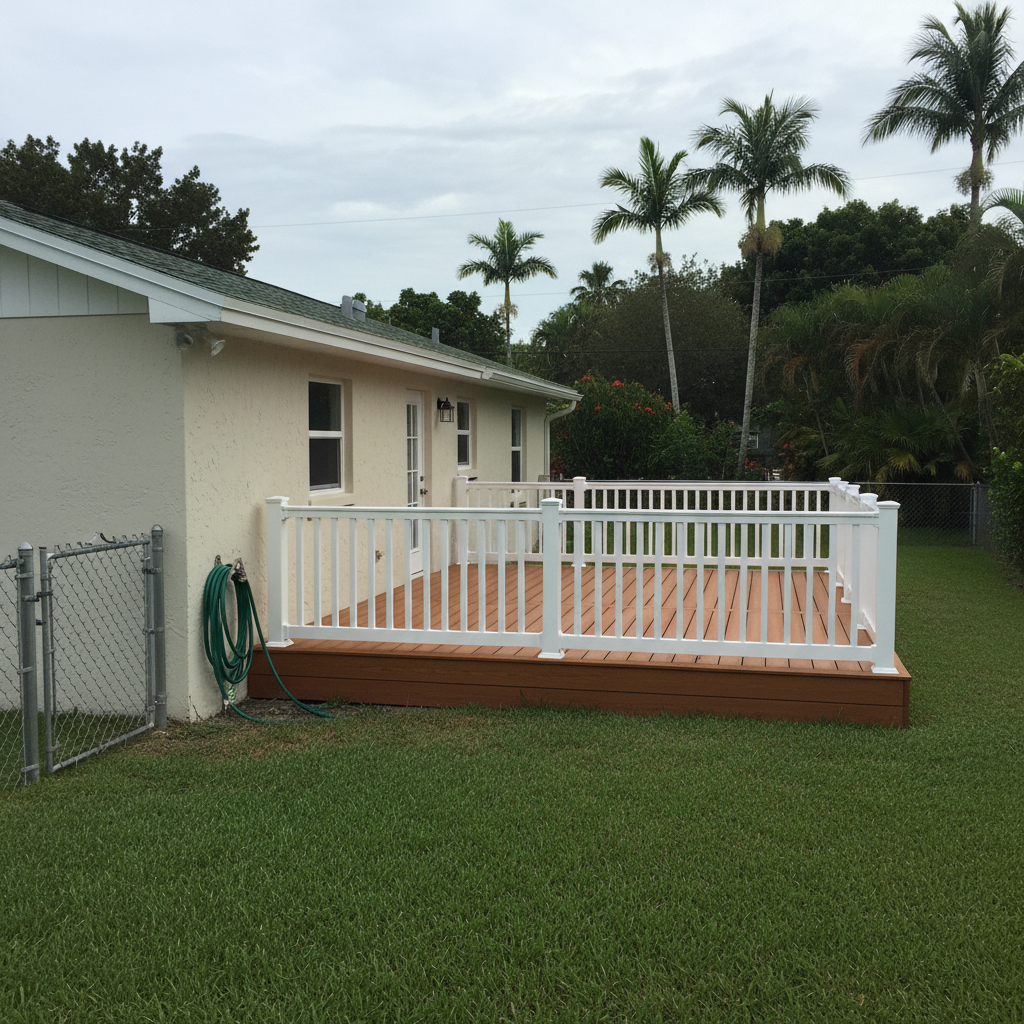
Anyone with a truck and a circular saw can call themselves a deck builder. Most of them are fine for a small repair. Fewer of them are set up to pull a permit, pass a footing inspection, and build something that's still square in eight years. Here's what actually separates the two, and what should make you hang up the phone.
Ask about the permit before you ask about price
In Winter Haven and the rest of Polk County, a deck attached to the house almost always needs a building permit, whether it's through the City of Winter Haven or Polk County's building division depending on where the lot sits. A detached deck under a certain height might skip it, but the builder should know the exact threshold, not guess. If someone tells you "we don't bother with permits, it just slows things down," that's your answer right there. Skipping the permit means skipping the footing inspection, and the footing is the one part of a deck you can't go back and check once the boards are down.
Most jobs here get at least two inspections: one after the footings are dug and the piers are formed, before any concrete is poured, and a final once the deck is framed and decked. If the house backs up to a lake, which a lot of Winter Haven lots do around Lake Howard, Lake Shipp, and the Chain of Lakes, there can be setback rules on top of the usual property line setbacks. A builder who's pulled permits in this county before will know this without having to call the office and ask.
What the ground here actually does
Most of Winter Haven sits on sandy soil, which drains fast and is generally easier to dig and set footings in than clay. That's the good news. The catch is the water table. Close to any of the lakes, or on a lot that used to be low pasture before it got filled for a subdivision, the water table can sit closer to the surface than people expect, especially after a wet summer. Footings here still need to go down to undisturbed soil, with Florida Building Code generally calling for a minimum of 12 inches below grade, and on a soft or recently filled lot that number should go deeper, not shallower. A builder who just eyeballs a post hole and pours without checking what's underneath is gambling with your deck's foundation.
Older neighborhoods near downtown, built mostly from the 1930s through the 1960s, often have an existing concrete patio or slab the new deck needs to tie into or build around, plus older plumbing and drain lines you don't want a post auger hitting blind. Newer subdivisions south of town tend to be on more uniform fill with an HOA that has opinions about railing style and stain color. Either way, someone who's worked here before has already run into the problem you're about to have.
Materials and hardware, not just the pretty wood
Pressure-treated pine is still the most common decking material in this area because it's cheap and it holds up to termites, which central Florida has no shortage of. Composite costs more up front but doesn't need restaining every two to three years, which matters here because UV and humidity chew through a stain job faster than they do up north. Either way, the fasteners matter more than people think. Modern pressure-treated lumber uses copper-based preservatives (ACQ) that corrode plain zinc screws and nails within a few years. The hardware needs to be hot-dip galvanized or stainless, and joist hangers and post bases need to be rated for it too. Ask what fastener they're using. If they shrug, that's worth noting.
Ledger board attachment is where a lot of cheap decks fail first. The ledger has to be bolted into the house framing, not just the siding, and it needs flashing behind it so water doesn't track down into the band joist and rot it out from the inside, which you won't see until the deck starts to sag. Florida's wind load requirements also mean joist hangers and post-to-beam connections should be rated for uplift, not just downward weight. A deck that looks fine sitting still can still fail in a storm if it wasn't fastened for wind in the first place, and Winter Haven sees real wind every hurricane season, June through November.
Signs to walk away
- No written contract, or a contract that doesn't list the lumber grade, fastener type, footing depth, or a payment schedule tied to actual progress.
- A price that's a lot lower than two or three other quotes for the same square footage and materials. Someone's cutting a corner somewhere, usually the footings or the fasteners, since those are the parts you can't see later.
- No proof of license or insurance, or reluctance to give you a certificate of insurance directly. A roofer or a deck builder without workers' comp coverage can leave you liable if someone gets hurt on your property.
- Vague answers about the permit process. "We'll handle it" isn't an answer. "We'll pull it through the county, footing inspection usually happens within a few days of the dig" is.
- Pressure to sign same-day. A deck is a few-thousand to twenty-thousand-dollar decision depending on size and material. One good day for a sales pitch isn't a reason to skip reading the contract.
What a solid timeline actually looks like
A straightforward 300 to 400 square foot attached deck, once permitted, usually takes a working crew somewhere between one and two weeks from footing dig to final boards, weather allowing. Florida's summer afternoon thunderstorms, which roll in almost daily from June through September, add delay more often than people expect, especially on the concrete cure for footings. A contractor who gives you a firm one-day timeline for a full installation is either doing a very small job or not being straight with you. Concrete footings generally need a few days before they can be loaded, and the framing inspection has to happen before the decking boards go down, not after.
None of this is complicated once you know what to ask. Permit and inspection process, footing depth for your specific lot, fastener rating, and a contract that spells out the materials by name. A builder who answers those without hesitation has probably done this enough times in this county to get it right. We go through all of this with homeowners before a shovel ever goes in the ground, and you can see the kind of work and detail we put into it on our deck builder page.